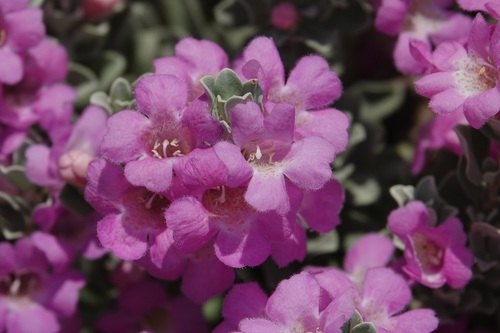
Usos en Paisajismo
Etiquetas de Estilo
Guía de Cultivo para el Sur de Florida
Requisitos de Luz
Requisitos de Agua
Water deeply 2–3 times per week during establishment, then reduce to weekly once roots are established.
Requires consistent moisture — not drought tolerant. Water 2-3x per week year-round; daily during establishment. Do not allow to dry out between waterings. Good drainage essential — root rot in poorly drained soils.
Suelo y Fertilización
Fertilizer: Balanced slow-release 8-2-12 or similar. Supplement with micronutrients in limestone soils.
Schedule: February, May, and September with balanced slow-release granular fertilizer.
Tolerancia a la Sal
- Altura Madura
- 3–6 ft
- Ancho Maduro
- 2–4 ft
- Tasa de Crecimiento
- fast
- Demanda de Agua
- 4/10
- Grado Florida
- Florida #1
- Costo Instalado
- $$
- Zonas USDA
- 10a, 10b, 11
- Estado FLEPPC
- None
- Calificación Iguana
- 5/10
Dónde Comprar en el Sur de Florida
Encuentre Chenille Plant en viveros del Sur de Florida — consulte disponibilidad y precios en viveros cerca de usted.
Preguntas Frecuentes
How fast does Chenille Plant grow in South Florida?
Chenille Plant has a fast growth rate. In South Florida's warm, humid climate it typically establishes quickly with proper watering and fertilization.
Is Chenille Plant safe for pets?
Chenille Plant is not safe for pets. Euphorbiaceae family — milky sap can cause GI upset if ingested. Low toxicity risk in typical landscape settings but advise pet-owning clients.
How much water does Chenille Plant need in South Florida?
Moderate water needs (4/10). Water deeply 2–3 times per week during establishment, then reduce to weekly once roots are established.
Can Chenille Plant tolerate salt air in South Florida?
Chenille Plant has low salt tolerance (3/10) and is not recommended near areas with significant salt air exposure.
Is Chenille Plant available in Miami-Dade County?
In Miami-Dade County, Chenille Plant is classified as: allowed. Allowed.
Disponibilidad por Condado en el Sur de Florida
Miami-Dade County
Allowed. Non-restricted non-native.
USDA Zone 10a–11. Tropical climate, year-round warmth and humidity.
Ver Guía del Condado →Broward County
Allowed. Non-restricted in Broward.
USDA Zone 10a–10b. Subtropical with warm winters and wet/dry seasons.
Ver Guía del Condado →Palm Beach County
Allowed. Cold sensitivity limits use in northern Palm Beach County.
USDA Zone 9b–10b. Transitional zone with occasional winter cold in north.
Ver Guía del Condado →Collier County
Allowed. Naples area suitable; protect from cold fronts.
USDA Zone 10a–10b. Subtropical Gulf Coast with seasonal flooding.
Ver Guía del Condado →Monroe County
Allowed. Low salt tolerance limits exposed Keys locations.
USDA Zone 11. Tropical maritime, highest salt exposure of all 5 counties.
Ver Guía del Condado →Siempre verifique los requisitos actuales del condado antes de la instalación.
Ask about Chenille Plant
Get answers grounded in UF/IFAS research and South Florida landscape data.